


Learn About Registry Coins Do's & Don'ts: How Collectors Compete with Top Collectors
Registry coins are certified numismatic specimens formally enrolled within competitive institutional platforms maintained by the Professional Coin Grading Service (PCGS) and Numismatic Guaranty Company (NGC), where individual holdings are assigned grade-based point scores and ranked against collections assembled by participants worldwide. The Set Registry framework integrates authentication, population data, and competitive scoring into a structured discipline that has fundamentally reshaped how collectors acquire, evaluate, and position certified coins within the broader numismatic market.
Overview
Registry participation centers on the enrollment of third-party certified coins into predefined set categories — such as Morgan Dollars, Walking Liberty Half Dollars, or Washington Quarters — maintained by PCGS and NGC on their respective digital platforms. Each enrolled coin receives a point score derived from its certified grade, its relative scarcity at that grade level within the population report, and its assessed value within the series. Participant collections are then ranked according to grade point average, set completion percentage, and overall weighted score, producing publicly visible leaderboards that define the competitive hierarchy within each category.
The Role of Certification in Registry Participation — Registry enrollment is contingent upon third-party certification by a recognized grading service. Coins encapsulated by PCGS or NGC are assigned numerical grades on the Sheldon scale (1–70), and those grades form the quantitative foundation of all registry scoring. Uncertified or raw specimens are not eligible for competitive registry enrollment under either institutional framework, and estimated grades — used only for historically significant collections assembled prior to the existence of modern certification — are treated as exceptional administrative provisions rather than standard practice.
The Top Pop Designation — Within registry scoring, the Top Pop distinction identifies specimens occupying the highest-certified grade position for a given coin date, mint mark, and series — with no examples recorded at a superior grade level in the population report. Under PCGS Set Registry scoring rules, coins with a recorded population of one at the highest grade and none graded higher receive two additional bonus points, institutionalizing the premium assigned to conditionally scarce material. NGC applies analogous structural incentives, as coins at or near the apex of population distributions contribute disproportionate point weight to overall set scores.
Competitive Motivation and Registry Participation — Competition in Set Registry reflects a broader shift in numismatics toward measurable excellence, public recognition, and institutional validation. Collectors participate in registry rankings to demonstrate curatorial expertise, historical stewardship, and connoisseurship within clearly defined and publicly visible frameworks, with each acquisition contributing to the standing and distinction of an entire assembled set. At the highest levels, competition among elite registry participants for leading positions within a given category concentrates demand on the finest available examples — reinforcing premiums for top-population coins and functioning as a structural force that sustains liquidity, price discovery, and long-term valuation stability within the upper tiers of the numismatic market.
History and Development
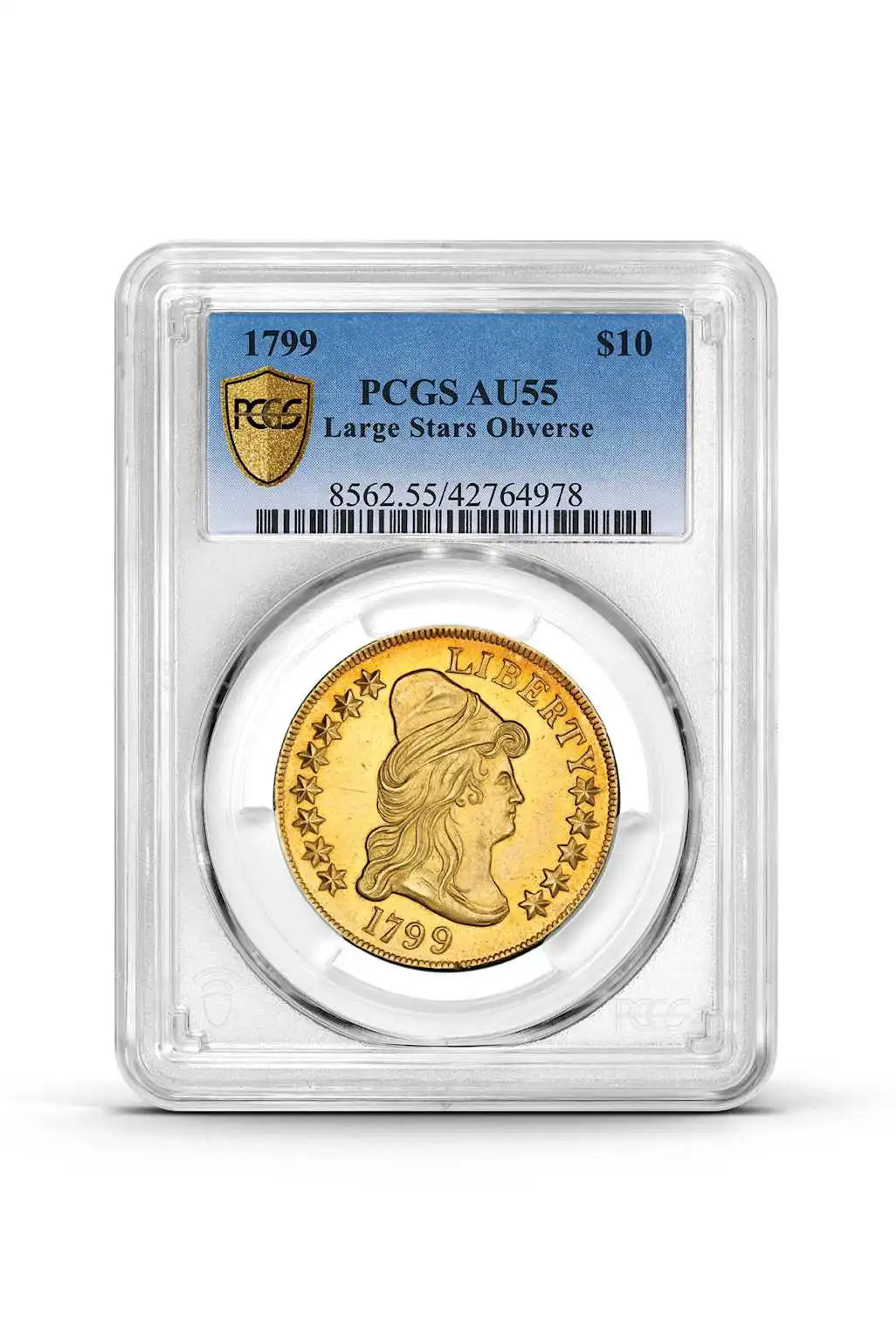
The institutional origins of registry collecting predate the modern internet era. PCGS introduced the Set Registry program in booklet format in 1997, establishing a print-based framework through which collectors could document certified holdings and compare them against standardized category structures. The program transitioned to a digital platform in February 2001, launching with 327 registered sets and representing the first online competitive collecting registry in the numismatic industry. Set Registry Awards were formally introduced in early 2002, with 15 sets receiving institutional recognition in that inaugural year — a number that has since expanded to more than 350 honored sets annually.
The NGC Registry emerged as a complementary institutional platform, and its recognition programs — including annual NGC Registry Awards — developed alongside those of PCGS. A significant structural expansion occurred in December 2019, when NGC announced that PCGS-certified United States coins would be eligible for competitive NGC Registry sets, broadening participation across the two primary certification ecosystems and reducing barriers for collectors holding coins certified by either service. This policy change reflected an institutional recognition that competitive registry collecting benefits from the widest possible participation base.
The American Numismatic Association (ANA), the largest numismatic membership organization in the United States, has historically addressed competitive collecting within its educational framework, recognizing registry-oriented disciplines as a formal dimension of the hobby. The convergence of standardized third-party certification, internet infrastructure, and institutional award programs created the structural conditions under which registry collecting could evolve from a specialized pursuit into one of the most actively observed competitive formats in contemporary numismatics.
Characteristics and Classification
Registry participation encompasses distinct collecting approaches, each characterized by differing scope, competitive emphasis, and acquisition strategy. The classification of a registry set is determined primarily by its structural objectives — whether those objectives prioritize breadth of coverage, the concentration of conditionally scarce specimens, or thematic assembly outside standard series parameters.
Complete Registry Sets — A complete registry set encompasses every coin required to fulfill all date-and-mint-mark slots within a predefined category, as established by the registry platform. Completion percentage constitutes a primary scoring factor, and complete sets typically carry significant competitive weight relative to partial sets of comparable individual coin grades. The pursuit of completion often requires acquiring specimens that present population challenges — dates and mint marks for which high-grade certified examples are scarce — making completion a measure of both breadth and market access.
Finest Known Sets — Some registry participants pursue the highest collective grade point average across a series rather than comprehensive set completion. These assemblies prioritize conditional rarity — defined as the relative scarcity of a specific coin at a specific grade level, independent of the coin's absolute rarity in lower grades — as the primary value driver. Finest Known sets are built around Top Pop and near-Top Pop specimens and tend to command the most significant market premiums within any given series.
Custom and Specialty Sets — Both PCGS and NGC provide mechanisms for the construction of custom and specialty set categories, accommodating thematic, topical, or narrowly defined collecting objectives that fall outside standard date-and-mint-mark series structures. These categories may be organized around design types, mint facilities, time periods, or collector-defined criteria, and they compete separately from the primary series leaderboards.
| Registry Category | Scoring Emphasis | Primary Competitive Factor |
|---|---|---|
| Complete Sets | Completion % + grade average | Breadth of coverage across all date/mint slots |
| Finest Known Sets | Highest grade point average | Top Pop and near-Top Pop specimen concentration |
| Custom / Specialty Sets | Collector-defined point criteria | Thematic cohesion and unique assembly |
Market Context
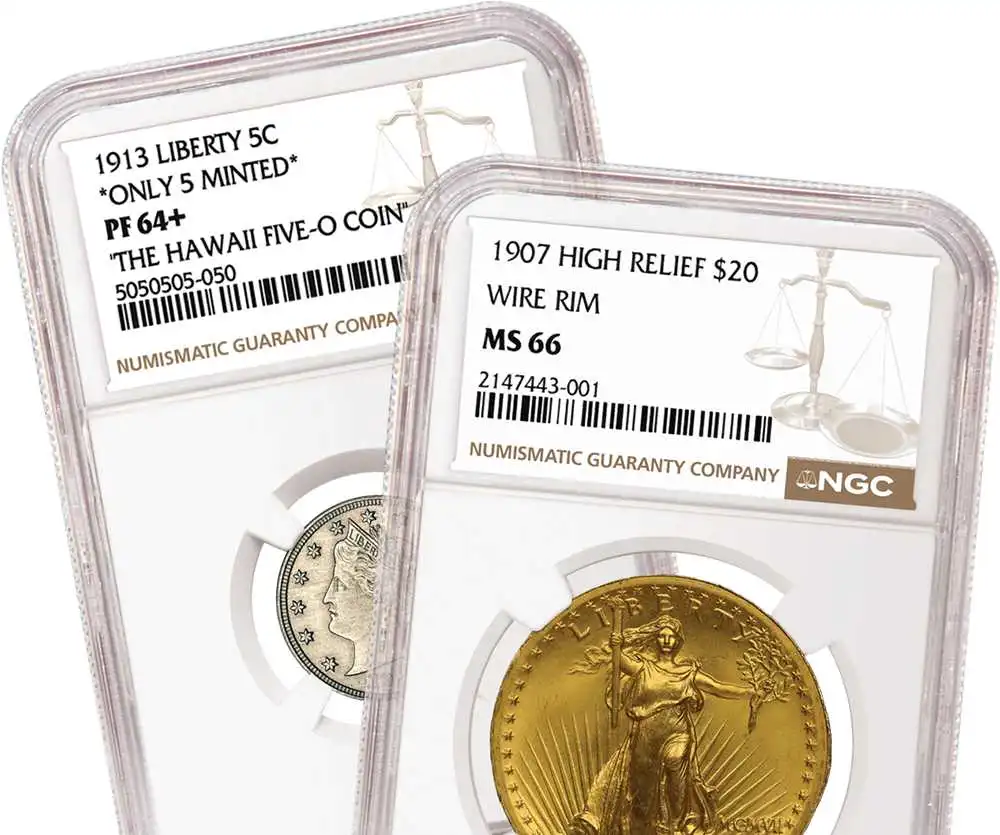
Market premiums are observed consistently on coins holding Top Pop status or occupying high registry positions within competitive set categories. Demand tends to concentrate on specimens where population reports — the publicly accessible census data maintained by PCGS and NGC reflecting the total number of coins certified at each grade level — document extreme scarcity at the highest attainable grades. These population dynamics exert direct influence on transactional behavior across the certified numismatic market, as registry competitors and non-registry collectors alike reference population data as a primary valuation input.
Valuation in the registry segment is shaped by multiple intersecting factors: the absolute rarity of the underlying coin type, the conditional rarity introduced by grade-level distribution, the perceived stability of the population ceiling, and the number of active registry competitors targeting the same series. Coins representing a sole highest-graded example — the definitive Top Pop — command premiums reflecting both their numismatic rarity and their registry utility as a scoring asset. Coins sharing the Top Pop designation with one or more other specimens command correspondingly differentiated premiums, with market recognition of the distinction between an exclusive and a shared population apex.
Market conditions in the registry segment are further shaped by the dynamics of resubmission and registry displacement. When a previously Top Pop coin is superseded by a newly certified specimen graded one point higher, its registry standing is immediately diminished even as its underlying numismatic character remains unchanged. This mechanism distinguishes registry-driven valuation from broader collectible markets in which rarity metrics are more static, introducing an element of population volatility that participants monitor through regular review of published population reports.
Institutional Standards and Documented Participation Practices
The institutional frameworks governing registry participation establish both affirmative procedural standards and documented limitations that shape outcomes for collectors engaged at competitive levels. These parameters are articulated through the official rules and guidelines published by PCGS and NGC, and they constitute the normative foundation of informed registry participation.
Affirmative Institutional Standards
Population report verification prior to acquisition is a recognized procedural standard in registry collecting, as grade populations are dynamic documents that change with each new certification submission. Cross-referencing the PCGS Population Report and the NGC Census for a target specimen provides a more complete picture of the total certified universe across both major grading services. Enrollment in the relevant registry platform is available at no cost; both PCGS and NGC offer unrestricted free registration as the formal institutional entry point for competitive participation.
Documentation of set composition — including holder certification numbers, grade designations, and population data at the time of acquisition — constitutes an institutional record-keeping standard that supports accurate registry maintenance and enables verification of competitive standing over time. Monitoring population ceiling stability, the degree to which the highest-certified grade population has remained constant across a documented period, is recognized as a material factor in evaluating conditionally rare specimens and the durability of their registry utility.
Documented Limitations and Participation Pitfalls
Acquiring a coin represented as Top Pop without independent, contemporaneous population report verification introduces the risk of registry displacement if the designation has since been superseded by a newly certified higher-grade specimen. The represented Top Pop status of a coin at the time of a prior transaction does not guarantee its current standing, as population data is continuously updated following each certification cycle.
Overemphasis on numerical grade designations without consideration of eye appeal — a recognized numismatic standard referring to the overall visual quality, luster, and aesthetic presentation of a specimen beyond its numerical grade — may produce collecting decisions that do not fully reflect the market character of a coin within the registry framework. Disregarding the distinction between a sole Top Pop and a tied Top Pop — wherein multiple examples share the highest-certified grade — may overstate the competitive exclusivity of a given specimen. Neglecting to assess conditional rarity within the full context of total surviving population across all certified grade levels limits the accuracy of scarcity assessments and registry utility evaluations.
Accessing Registry Coins Material
Certified registry coins and Top Pop specimens are sourced through a range of institutional channels within the numismatic market, including authorized dealers, numismatic shows, and grading service submission programs. Evaluation of registry-eligible material requires cross-referencing the current population reports maintained by PCGS and NGC, ensuring that population data reflects current certification totals at the time of consideration. Prospective registry participants are encouraged by both institutional platforms to verify certification numbers and grade designations through the respective online verification tools prior to enrollment.
Dynasty Collective maintains an actively curated inventory of certified registry coins and Top Pop specimens drawn from the PCGS and NGC certification ecosystems, providing a structured point of access to registry-eligible material across multiple series and categories.
Related Topics
Conclusion
The Set Registry discipline, as developed and maintained by PCGS since 2001 and NGC through its parallel institutional platform, represents one of the most structurally defined competitive frameworks in contemporary numismatics. By integrating third-party certification standards, publicly accessible population data, and formal scoring methodologies, registry collecting provides participants with a quantitatively grounded system for evaluating, positioning, and competing with certified holdings across hundreds of established numismatic series.
Registry coins occupy a cultural dimension that extends beyond their competitive market function, serving as material artifacts that preserve monetary history, technological evolution in minting practices, and artistic craftsmanship across the breadth of American numismatic history. Their liquidity is reinforced by transparent grading standards, established market comparables, and the institutional record infrastructure maintained by PCGS and NGC — characteristics that distinguish registry-quality material as a recognized and measurable asset class within the numismatic ecosystem. Understanding the institutional standards, population dynamics, and classification structures that govern registry participation — including the significance of Top Pop designations, the mechanics of conditional rarity, and the documented participation practices codified by PCGS and NGC — constitutes the foundational knowledge base for sustained and informed engagement with this segment of the numismatic market.